[Earth]
[Sky]
While overcast and cloudy weather conditions both involve clouds in the sky, there is an important distinction between the two terms. Let’s take a closer look at what defines overcast weather and what defines cloudy weather. Overcast Weather Overcast refers to dense, complete, or nearly complete cloud cover where clouds obscure most or all of the sky and block out direct sunlight.
Read more...
[Sky]
If you still crave meteors after the Geminids, keep your gear handy for the Ursids. This faithful shower peaks on the night of 22 December, just after the solstice, delivering roughly 10 meteors per hour with occasional outbursts when Earth crosses dense filaments shed by Comet 8P/Tuttle. The radiant sits near the Little Dipper’s bowl in Ursa Minor, so it never sets for most Northern Hemisphere observers.
Read more...
[Earth]
Not sure what the source is, but it is useful data anyway. Here comes the number of days with temperatures below 0 per year.
Read more...
[Earth]
Most of Europe at least.
Read more...
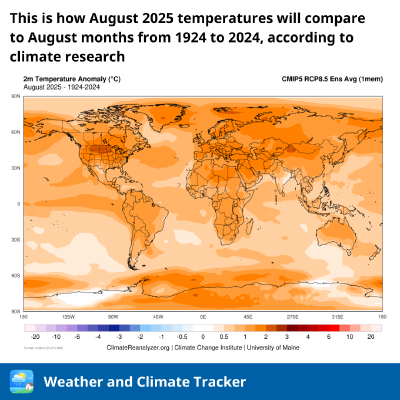
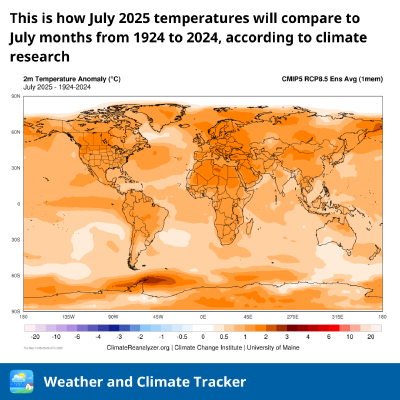
If you’ve ever tuned into a weather broadcast or checked a weather app, you’ve likely seen vibrant, colorful maps. While they might look similar at first glance, these maps often represent very different types of information. Misunderstanding the purpose of these maps can lead to confusion. Let’s break down two common types:
Read more...
[Sky]
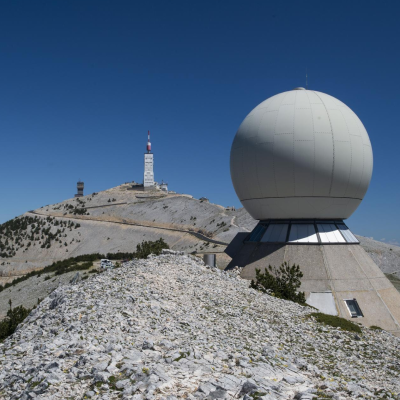
Have you ever heard of the Mistral wind? It’s one of the most famous winds in the world and has a big impact on the weather in southern France. In this article, we’ll explore what makes the Mistral special, when it happens, and how it affects the cities in its path.
Read more...
[ sky]
Have you ever heard of the Cierzo wind? It’s a refreshing breeze that blows across the Ebro Valley in Spain. We will explore when this wind is most likely to occur, what causes it, and which cities are affected by its presence. Seasons and Occurrence: The Cierzo wind is most common during the transitional seasons of autumn and winter.
Read more...
[Sky]
Just as the Southern branch winds down, the Northern Taurids take over the night sky. Activity extends from 13 October to 2 December, but the peak is expected around 12 November when Earth meets the densest stream of dust from Comet 2P/Encke. The hourly rate tops out near 15, yet observers treasure the shower for its slow, brilliant meteors that seem to crawl across Taurus.
Read more...