Solar Eclipses in 2026 and 2027
The years 2026 and 2027 will bring several spectacular solar eclipses visible from different parts of the world. Here’s what to expect:
2026 Solar Eclipses
February 17, 2026 - Annular Solar Eclipse
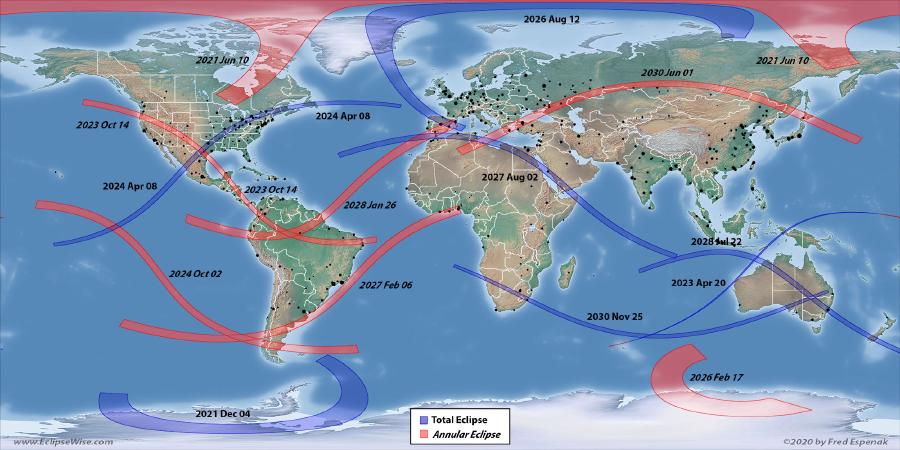
An annular solar eclipse will occur on February 17, 2026. During an annular eclipse, the Moon is too far from Earth to completely cover the Sun, creating a “ring of fire” effect. This eclipse will be visible from parts of Antarctica and the southern Indian Ocean.
August 12, 2026 - Total Solar Eclipse
The highlight of 2026 will be a total solar eclipse on August 12, 2026. This is one of the most anticipated eclipses of the decade. The path of totality will cross:
- Greenland - The eclipse will begin over the Arctic, passing through northern Greenland
- Iceland - The path of totality will cross Iceland, making it an excellent viewing location
- Spain - The eclipse will pass through northern Spain, including regions like Galicia and parts of the Mediterranean coast
- Mediterranean - The path continues across the Mediterranean Sea
This total eclipse will last up to approximately 2 minutes and 18 seconds at maximum duration. Major cities in the path include parts of northern Spain, making it accessible to many European observers.
2027 Solar Eclipses
February 6, 2027 - Annular Solar Eclipse
An annular solar eclipse on February 6, 2027, will be visible from:
- Parts of South America (Chile, Argentina)
- Antarctica
- The South Atlantic Ocean
The annular phase will create a dramatic “ring of fire” effect visible to observers in the path.
August 2, 2027 - Total Solar Eclipse
Another major total solar eclipse will occur on August 2, 2027. This eclipse will have one of the longest durations of totality in the 2020s, lasting up to approximately 6 minutes and 23 seconds at maximum. The path of totality will cross:
- North Africa - The eclipse begins over the Atlantic and crosses Morocco, Algeria, Tunisia, and Libya
- Mediterranean - Passes over the Mediterranean Sea
- Middle East - Continues through Egypt, Saudi Arabia, and parts of the Arabian Peninsula
- Asia - The path extends into parts of Asia, including Yemen and the Indian Ocean
This will be one of the longest total solar eclipses visible in this decade, making it particularly special for eclipse chasers.
Viewing Tips
- Safety First: Never look directly at the Sun without proper eye protection. Use certified solar eclipse glasses or viewers.
- Weather: Check local weather forecasts, as cloud cover can obscure the eclipse.
- Location: Being in the path of totality (for total eclipses) or the annular path (for annular eclipses) provides the best viewing experience.
- Timing: Arrive at your viewing location well in advance to set up equipment and find a good spot.
(Source: eclipsewise.com)
(Source: eclipsewise.
This post is also available in: Spanish, Russian, Ukranian, Belarusian, Portuguese, French, German, Italian, Turkish.