What’s the difference between glaze ice (from freezing rain) and black ice?
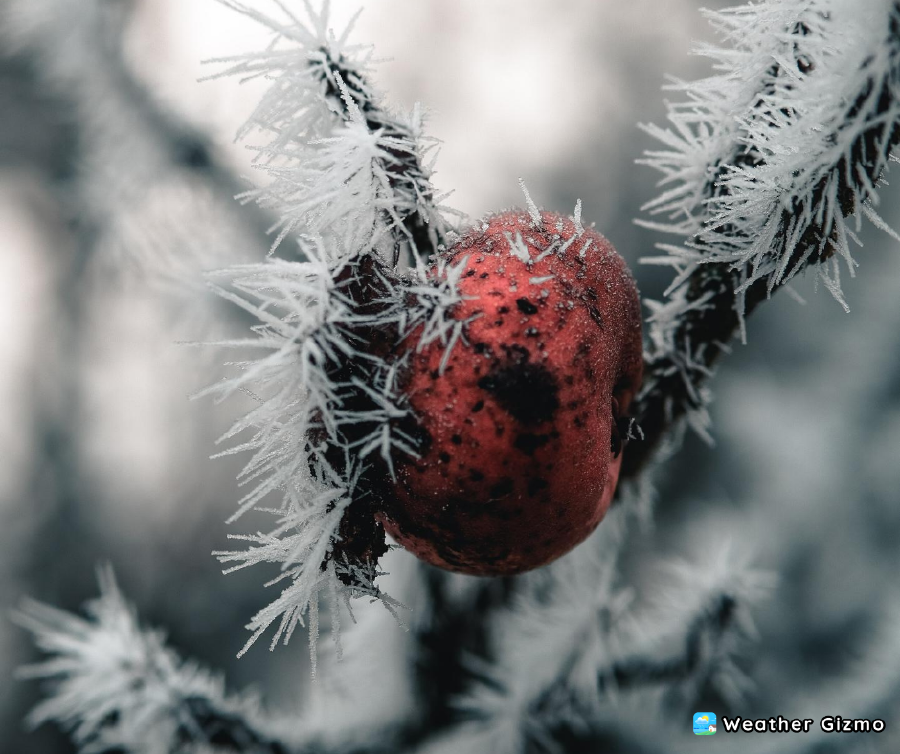
In winter forecasts you may hear two very similar-sounding terms. In Russian they’re «гололёд» and «гололедица» — and they describe different kinds of ice.
Glaze ice (ice on objects)
This is ice that coats objects: tree branches, power lines, roofs, railings, cars. It most often forms during freezing rain/drizzle when the air temperature is around 0 °C (or slightly below) and supercooled droplets freeze immediately on contact, creating a smooth, glassy layer.
Why it’s dangerous:
- it adds weight to branches and wires (breakage, falling trees/lines);
- it makes steps, handrails and any exposed surface extremely slippery;
- it can build up quickly.
Black ice / road ice (ice underfoot and under wheels)
This is a thin, slippery ice crust on the ground: sidewalks, roads, courtyards. It usually appears when:
- there was a thaw / wet snow / rain, then temperatures dropped and everything refroze;
- melted snow or water spread across the surface and later froze into a thin film.
It’s especially treacherous because it can be almost invisible (the classic “black ice” on asphalt).
Easy way to remember
- Glaze ice: ice on objects (branches, wires, railings).
- Black ice / road ice: ice on the ground (roads and sidewalks).
Quick safety checklist
- Walking: wear shoes with good grip, take shorter steps, keep hands free, avoid shiny “mirror-like” patches.
- Driving: increase following distance, avoid sudden steering/braking, slow down early; bridges and overpasses freeze first.
It’s especially treacherous because it can be almost invisible (the classic “black ice” on asphalt).
This post is also available in: Spanish, Russian, Ukranian, Belarusian, Portuguese, French, German, Italian, Turkish.